FFMI Calculator
Determine your fat free mass index
FFMI Meaning
FFMI stands for Fat-Free Mass Index. It measures your fat-free body mass in relation to your height. Fat-free mass includes muscle, bones, organs, and body water while excluding body fat.
Unlike Body Mass Index (BMI), which uses total body weight, FFMI focuses on lean body mass. Therefore, it can provide a more useful way to evaluate muscularity and monitor changes in body composition.
Athletes, fitness enthusiasts, and people interested in fitness may use FFMI to track muscle development and understand changes in their body composition over time.
FFMI Formula
The FFMI formula calculates your fat-free mass relative to your height. To calculate your score, you need your body weight, body fat percentage, and height.
Step 1: Calculate Fat-Free Mass
First, calculate your fat-free mass by subtracting your body fat from your total body weight.
Fat-Free Mass (kg) = Weight (kg) × (1 − Body Fat Percentage ÷ 100)
Step 2: Convert Height to Meters
If you use feet and inches, convert your height into meters:
Height (m) = (Feet × 12 + Inches) × 0.0254
Step 3: Calculate FFMI
Once you know your fat-free mass and height, use this formula:
FFMI = Fat-Free Mass (kg) ÷ Height (m)²
Imperial Formula
If your weight is in pounds, first convert your fat-free mass into kilograms:
Fat-Free Mass (kg) = Weight (lbs) × (1 − Body Fat Percentage ÷ 100) ÷ 2.20462
Then use the standard FFMI formula.
FFMI Calculator for Men
An FFMI calculator for men estimates fat-free mass in relation to height. It uses your weight and body fat percentage to calculate your FFMI score.
Unlike BMI, which considers total body weight, FFMI focuses on fat-free mass. This makes it useful for men who want to monitor muscular development, track fitness progress, and understand their body composition.
Whether you are a beginner, an experienced gym-goer, or an athlete, your FFMI score can help you evaluate changes in lean body mass over time.
FFMI Calculator for Women
An FFMI calculator for women estimates fat-free mass relative to height using body weight and body fat percentage.
Women generally have different body composition characteristics from men. Therefore, it is important to interpret female FFMI results using appropriate female reference ranges.
Whether you are a beginner or an experienced athlete, tracking FFMI can help you monitor changes in lean body mass and understand your muscular development.
FFMI Range Chart
An FFMI range chart helps you understand your muscularity in relation to your height. Your score can vary depending on genetics, training experience, body composition, and sex.
General FFMI Ranges for Men
| FFMI Score | General Description |
|---|---|
| 17–18 | Lower muscularity |
| 18–20 | Average physique |
| 20–22 | Fit and athletic |
| 22–23 | Highly muscular |
| 24–25 | Very high muscularity |
| 25+ | Unusually high muscularity |
General FFMI Ranges for Women
| FFMI Score | General Description |
|---|---|
| 14–16 | Lower muscularity |
| 16–18 | Average physique |
| 18–20 | Fit and athletic |
| 20–21 | Highly muscular |
| 21–22+ | Very high muscularity |
These ranges are general reference estimates, not strict medical standards. Individual results can differ, so men and women should compare their scores with appropriate reference data.
How to Interpret Your FFMI Score
Your FFMI score provides an estimate of how much fat-free mass you carry relative to your height. However, the number alone does not tell the whole story.
Consider these important factors when interpreting your result:
- Body Fat Percentage: Accurate body fat measurements help produce a more reliable FFMI estimate.
- Training Experience: Your workout history can influence your muscular development.
- Genetics: Natural differences in body structure and muscle-building potential affect individual FFMI scores.
- Sex: Men and women have different body composition characteristics, so use the appropriate reference ranges.
- Progress Over Time: Comparing measurements taken under similar conditions can help you monitor changes in body composition.
What Does an FFMI of 23 Mean?
An FFMI of 23 generally indicates a high level of muscularity for a man. It suggests that the person has a relatively high amount of fat-free mass compared with their height.
However, this score does not automatically indicate steroid use or guarantee a particular level of athletic performance. Genetics, body fat percentage, training experience, and measurement accuracy all influence the result.
Related Fitness Calculators
Body Type Calculator for Men
A body type calculator for men helps identify common body-type classifications, including ectomorph, mesomorph, and endomorph. Understanding these classifications can provide general fitness guidance, although body types are not scientifically precise categories for determining your training or nutrition needs.
Muscle Mass Calculator for Men
A muscle mass calculator for men estimates body composition and helps users monitor changes in lean body mass. You can use it to follow muscle-building progress and evaluate changes during bulking or cutting phases.
Common FFMI Calculation Mistakes
Avoid these common mistakes when calculating and tracking your FFMI:
- Using an inaccurate body fat percentage: Incorrect body fat estimates can affect your final FFMI score.
- Changing measurement methods: Use the same measurement method whenever possible to make progress comparisons more consistent.
- Ignoring body fat changes: Changes in body fat can influence your fat-free mass and FFMI results.
- Comparing different individuals without context: Differences in sex, height, genetics, and training experience can affect FFMI.
- Treating FFMI as a measure of overall health: FFMI estimates muscularity but does not measure cardiovascular fitness, strength, or overall health.
Remember that a higher FFMI does not automatically mean better health or fitness. Focus on consistent training, balanced nutrition, and long-term progress.
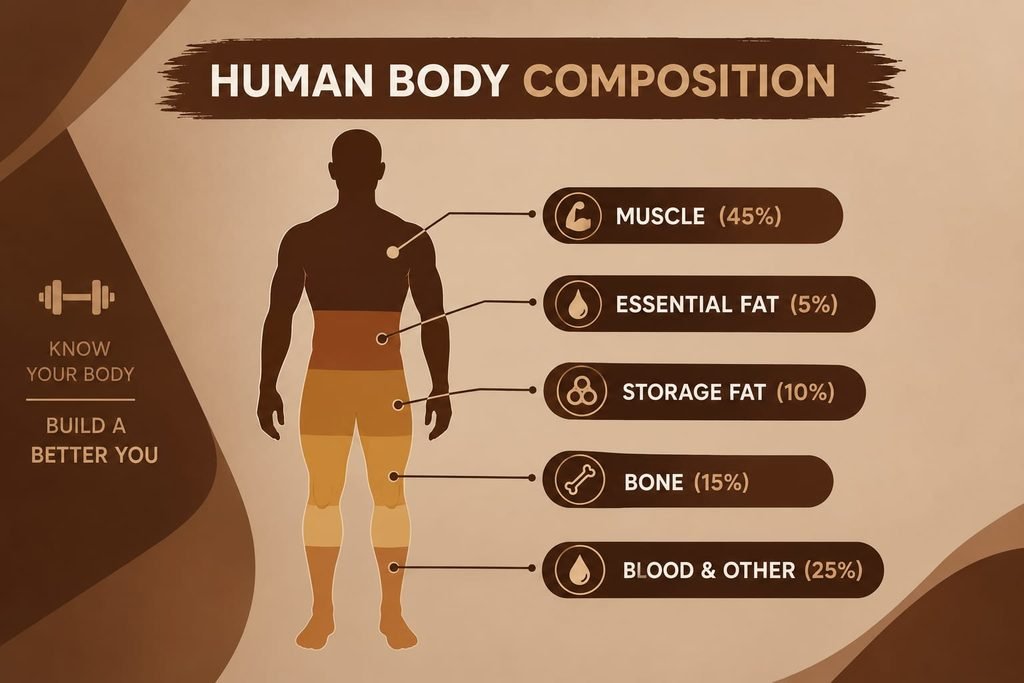
FFMI above 22 (men) or 18 (women) already indicates a good physique.
FFMI RANGE
| FFMI Range | Category | Meaning |
|---|---|---|
| 16–17 | Below Average | Minimal muscle development |
| 18–19 | Average | Healthy, balanced muscle level |
| 20–21 | Above Average | Athletic, active individual |
| 22–23 | Muscular | Strong, trained physique |
| 24–25 | Very Muscular | Top natural muscle range |
| 26+ | Enhanced | Possible use of performance enhancers |
Methodology
The FFMI (Fat-Free Mass Index) was calculated using an evidence-based approach that estimates an individual's lean body mass relative to height. First, body fat percentage was determined using reliable anthropometric measurements or validated body composition methods. Fat-Free Mass (FFM) was then calculated by subtracting fat mass from total body weight.
The FFMI was computed using the standard formula:
FFMI = Fat-Free Mass (kg) ÷ Height² (m²)
To improve accuracy, the FFMI score was normalized for height using the widely accepted adjustment formula:
Adjusted FFMI = FFMI + 6.1 × (1.8 − Height in meters)
FAQs
A: FFMI (Fat-Free Mass Index) is a measurement that evaluates your lean muscle mass relative to your height. It provides a better assessment of muscularity than BMI.
FFMI is calculated using your height, body weight, and body fat percentage to estimate your fat-free (lean) body mass.
For most natural males, an FFMI between 19–22 is considered average to good, while 22–25 indicates a high level of muscularity. An FFMI above 25 is uncommon without exceptional genetics or performance-enhancing drugs.
An FFMI of 23 generally indicates a high level of muscularity, particularly for a natural male lifter. It suggests that you have developed a substantial amount of lean muscle mass relative to your height. Many FFMI reference charts place 22–23 in the excellent, athletic, or very muscular range.
Normalized FFMI adjusts for height, giving fair results for both tall and short individuals.
Men: 20–23 = fit and athletic. Women: 17–19 = strong and toned.
Fat-Free Mass Index.
Normalized FFMI adjusts for height, giving fair results for both tall and short individuals.
Men: 20–23 = fit and athletic. Women: 17–19 = strong and toned.
It compares your fat-free mass to your height to estimate true muscularit